Eisenkot: Tagesschau asks if Netanyahu’s ‘era’ is ending, CGTN stresses ‘28 days’ to form a government
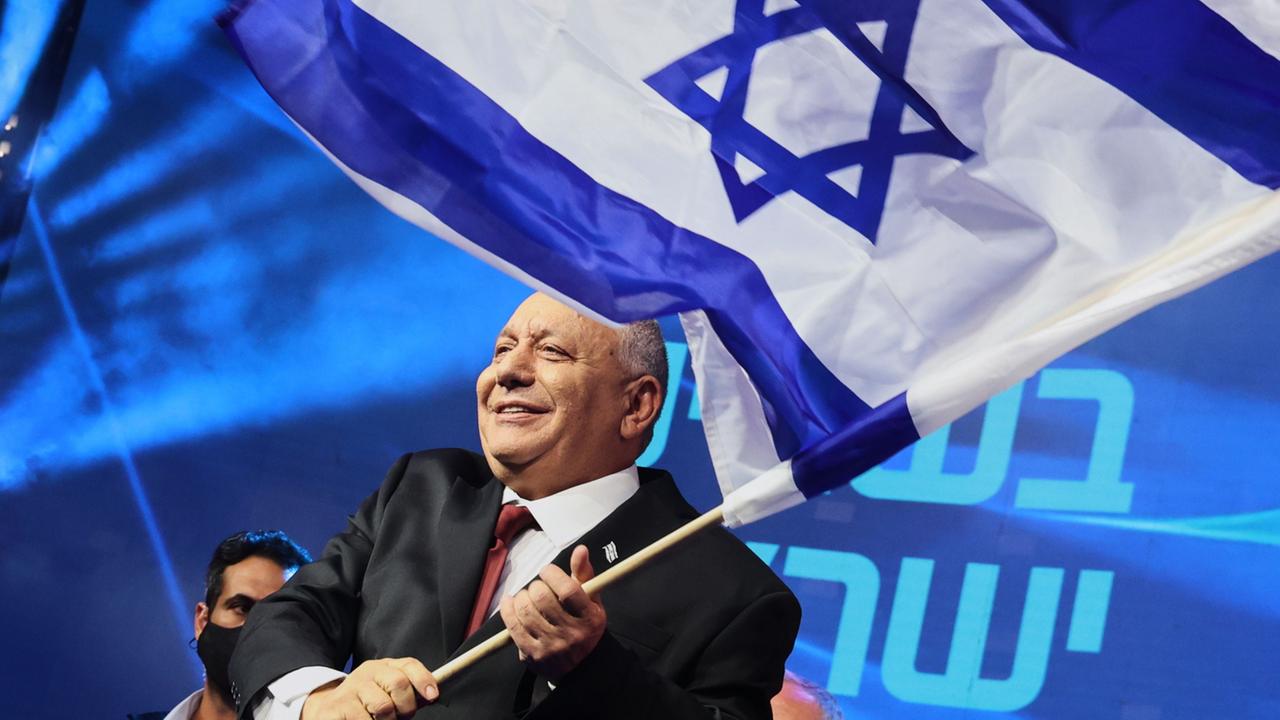
Israeli President Isaac Herzog has given opposition leader Gadi Eisenkot the mandate to form a government after an election in which neither bloc reached the 61-seat majority. The outlets agree on the core facts but differ in emphasis: Western outlets give more space to the political contest and historical context, while CGTN focuses more on procedure and the breakdown of recommendations.
What Western media report
Tagesschau (Germany) asks whether the Netanyahu era is ending and reports that factions with 67 of 120 lawmakers recommended Eisenkot, including Arab politicians, even though his bloc officially refuses to cooperate with Arab parties. It also mentions a possible approach to ultra-Orthodox parties and the dispute over military service for ultra-Orthodox students. It reports Netanyahu's call for a "national unity government" and his warning that a government dependent on Arab parties would destroy Israel "from within", as well as Eisenkot's reply calling it a "cheap PR stunt". BBC (UK) gives the seat breakdown: Likud and allies 53, Eisenkot's bloc 48, the two Arab alliances together 19, making them potential kingmakers. It reports 67 recommendations for Eisenkot against 46 for Netanyahu, outlines three possible government scenarios and recalls the 2020 Netanyahu–Gantz rotation deal.
What media from these countries report: China
CGTN (China, state media controlled by the Chinese Communist Party) reports the same mandate and timeline: 28 days with a possible 14-day extension. It describes the procedure after a failure in more detail than the Western outlets: Herzog may assign the task to another candidate, at least 61 lawmakers may propose a candidate, and if that also fails parliament is dissolved and new elections follow. It breaks the recommendations down into 48 lawmakers from four opposition parties plus 19 from Arab-led parties, and adds that the seven United Torah Judaism lawmakers endorsed neither candidate. It presents Netanyahu's words as a claim that Arab parties seek Israel's destruction and adds his proposal that a unity government include all current coalition parties and "all the Zionist parties". Citing unnamed analysts, it says Eisenkot faces a difficult path to a majority.
Differences
- Figures: BBC (UK) gives seat counts per bloc (53, 48, 19) and 46 recommendations for Netanyahu, while CGTN (China) breaks the recommendations down by party and notes 7 abstaining United Torah Judaism lawmakers. Tagesschau (Germany) gives only the total of 67.
- Framing: Tagesschau (Germany) stresses the possible end of Netanyahu's era, BBC (UK) the options and precedents, CGTN (China) the legal procedure and deadlines.
- Netanyahu's statements: Tagesschau (Germany) reports the claim that a government with Arab parties would destroy Israel "from within"; CGTN (China) reports the claim that Arab parties seek Israel's destruction. BBC (UK) does not report these remarks.
- Omissions: only Tagesschau (Germany) includes Eisenkot's "cheap PR stunt" response. Only BBC (UK) mentions the 2020 precedent. Only CGTN (China) details the scenario of failure in full.
- Sourcing of assessments: CGTN (China) cites unnamed analysts, whereas Tagesschau (Germany) and BBC (UK) explain the difficulty through election arithmetic and party positions.
Where they agree
- All outlets state that Herzog gave the mandate to Eisenkot, that he has 28 days plus a possible 14-day extension, and that he received 67 recommendations.
- All report that neither bloc won the 61 of 120 seats needed and that Netanyahu called for a national unity government while warning about dependence on Arab parties.
- All describe coalition-building as difficult because of divisions over cooperation with Arab and ultra-Orthodox parties.
Sources: read the originals
- Israel
- Eisenkot
- Netanyahu
- Herzog
- government formation
- Knesset
 Russia & Ukraine
 North America
 Europe
 Europe
Comments
No comments yet. Be the first.